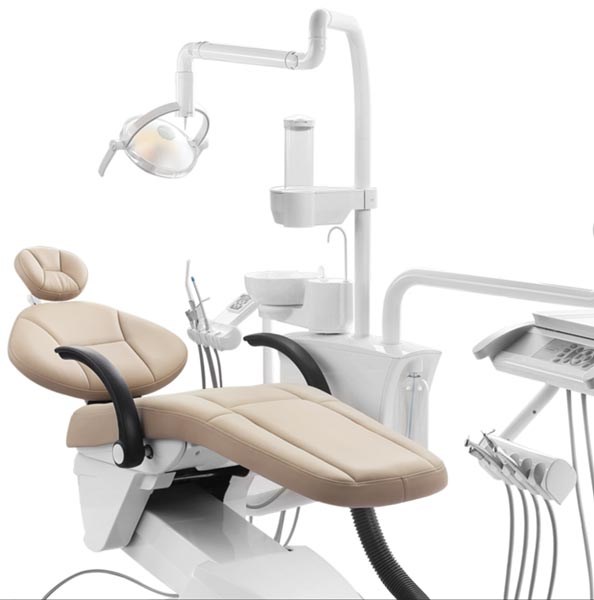
Aesthetic dentistry
Cosmetic (aesthetic) dentistry is a branch of dentistry in which treatments aim to improve the color and shape of teeth and gums

Aesthetic dentistry is a branch of dentistry that involves skills and techniques to improve your smile’s appearance, shape, color, alignment, and size as well as its overall health and function.
There are many dental procedures available that refer to aesthetic dentistry, all of which are designed to improve the appearance of your teeth. These include teeth whitening treatments, gum lifting (gingivectomy) micro-abrasion, bonding, aesthetic fillings, veneers, crowns. A combination of these techniques can whiten and improve the shape and colour of your teeth.
In order to discover what are the right procedures for you, you will need to have a consultation with your dentist. The condition of your teeth before and what result you want to achieve after the treatment, will help your dentist to diagnose what can be done for you and determine the treatments that will work best for you.
Find out more about each procedure in the “What to expect” and “FAQ” section.
LASER GUM LIFT (GINGIVECTOMY)
First appointment
During your consultation visit, our doctors will perform an oral examination of your gums and teeth as well as x-ray imaging, review your medical history and perform any necessary diagnostic tests to determine if you are a candidate for any of our cosmetics procedures. They will customize a treatment plan with your input.
What to expect before the treatment
In the days before the procedure, you ought to get your teeth professionally cleaned in the dental office. If you are having any regular medical therapies, there is no reason to make any changes in your medications since laser gum lift is noninvasive treatment. We would also suggest a light meal prior to your procedure, because you will not be allowed to eat immediately after the treatment.
What to expect during the procedure
While many cosmetic dentists continue to perform gum lifts by cutting and suturing the gums, our doctors utilize a medical laser, which significantly reduces the pain, risk of complications, and recovery time for this procedure. At first, local anesthesia is applied to all the areas that will be affected by the procedure. When complete effect is achieved, the doctor will gently, accurately and precisely remove small amounts of gum tissue. The laser not only removes tissue, but it immediately closes the remaining tissue, greatly reducing bleeding and eliminating the need for stitches. With expertise and a keen eye, he/she will remove the right amount of tissue to enhance the beauty and symmetry of your smile while keeping it natural looking. The amount of time the procedure takes depends on the size of the area that needs contouring. Most patients require less than an hour.
What to expect after the procedure
While the laser technology reduces healing time and swelling significantly, you will still want to follow some basic aftercare guidelines to ensure maximum healing. You may experience some tenderness or discomfort. This can be relieved with over-the-counter pain medication, such as ibuprofen.
Most patients experience mild discomfort for a few days. If your pain is severe or lasts longer than a week or you experience significant bleeding or swelling, be sure to call your dentist.
Here are a few other tips to help you enjoy a comfortable recovery:
•You should not eat or drink anything until the numbness in your mouth is completely gone.
•Stick with soft foods. Avoid crunchy, hard, and spicy foods
•Avoid mouthwash with alcohol.
•Stick to your regular dental hygiene routine but be sure to brush and floss gently to avoid overworking the contouring sites.
•Since smoking and tobacco products extend healing time, you should avoid these for at least two days.
•Rest is always an important part of healing.
AESTHETIC FILLINGS
Aesthetic fillings are indicated in certain situations when patients have decays on the front teeth, larger spaces between the teeth (diastemas) or in situations when remodeling of the teeth is required in cases when teeth are to be made symmetrical, their shape should be modified etc. These fillings are very similar to the standard fillings for closing cavities after caries removal, however their chemical structure is a little bit different and modified so that they meet the aesthetic criteria.
In situations when there is no caries on the teeth, the teeth are left intact and no tissue is removed, making the procedure painless and comfortable for the patient. Therefore the dentist will not put any anesthetics as pain is not expected, which is the only difference in the protocol between cariotic and non cariotic teeth. In certain cases, a rubber dam may be place to isolate the teeth from fluid contamination during the procedures. After this is done, the teeth are bonded and the fillings are placed on the teeth. After the fillings are placed and light cured, they are polished so that the natural appearance is achieved.
One should note that after the fillings are completed, the patient is forbidden to bite hard food, like apples, peanuts, berries, meat etc. This requirement is very important as the aesthetic fillings are composites (plastic modified for dental use) and as such are likely to break in case of stronger pressure or stress.
PORCELAIN VENEERS
First appointment
Prior to becoming a porcelain veneers patient, you will need to come in for a consultation so your dentist can determine if you meet the required criteria for such procedures. One should note that not every patient is indicated for veneer treatment. It is also important to remember that porcelain veneers are permanent and your natural teeth will have to be prepared for them. If you and your dentist decide that porcelain veneers are the best option to give you the smile you have been dreaming of, you will next design what the finished veneers will look like. Together with your dentist you will decide on the best shape, length, width, and color for your beautiful new smile.
The procedure
The entire porcelain veneers process generally takes from about few days to few weeks, and you will be required to visit your dentist for several appointments. After you and your dentist have determined the design for your veneers, treatment will start. The dentist will also offer you the possibility of designing temporary veneers so that you can see the shape of your future veneers in your mouth and how you will look like. Sometimes, laser gum treatment is required before starting with the procedures so that the gum is shaped adequately. Treatment begins with some shaping of your natural teeth to prepare them for placement of the veneers. A mold will be made of your mouth, which is what will be used to custom-make the veneers just for you. When they are ready, they will be permanently on to your teeth. This usually takes place in a separate appointment.
Post-Procedure Care
The nice thing about caring for your veneers is that you can follow the same regime as you would for your natural teeth. Floss and brush daily, and visit your dentist regularly for exams and cleanings. If you care for them properly, your veneers could last as long as a decade or more! The dentist will also give you a mouth guard that you will place on your teeth during night sleep so that you protect your veneers from damaging as well as protect your teeth from over abrasion as well.
Here are some care tips for your new veneers:
•When it comes to cleaning your veneers, treat them like you would your natural teeth. Because some of the natural tooth is still exposed, you definitely need to brush and floss at least twice daily and use a non-abrasive toothpaste that contains fluoride.
•Be careful with what foods you eat with veneers. Limit staining foods like coffee, wine, and dark colas. If you do choose to indulge in these foods, clean your veneers thoroughly after eating. Because veneers are a man-made material, they do have some inherent stain resistance, but you don’t want to risk needing to replace them ahead of schedule.
•You will need to replace your veneers eventually. The average life of a veneer is between 7-12 years, depending on how well you take care of them, and how rough you are on your teeth. Things like tooth grinding can shorten their life down considerably.
Schedule your visit today.
Easily access our services via phone or our
online contact form if you have any questions
or would like to schedule an appointment.
Our team will reply to you as soon as possible.